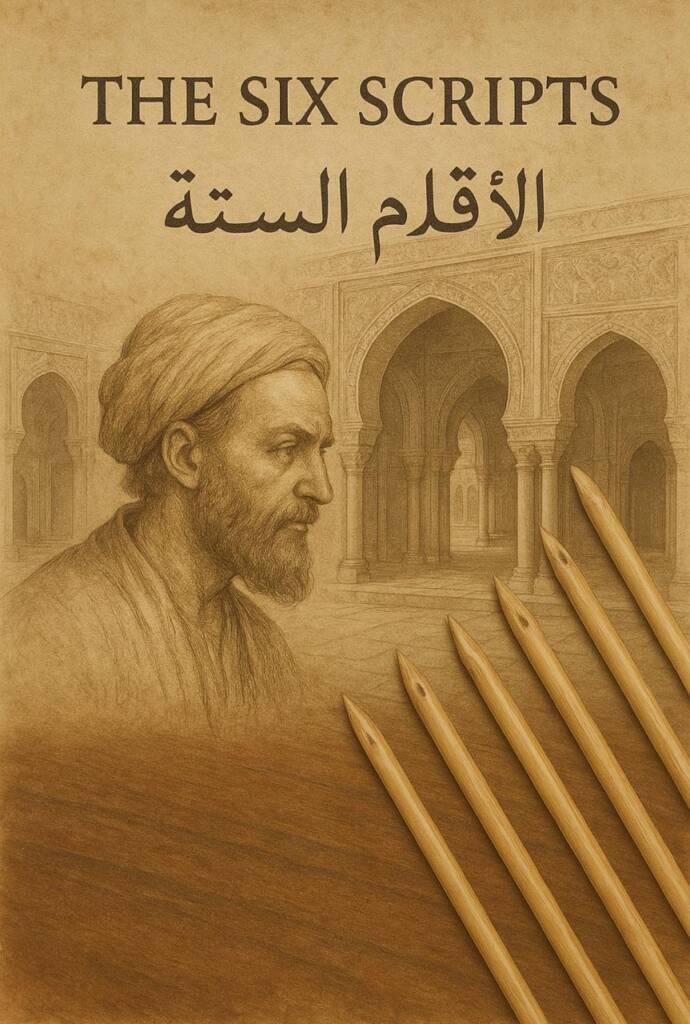
Arabic calligraphy has preserved its artistic traditions, principles, and aesthetic beauty throughout the ages. Calligraphers devoted themselves to mastering its rules and passing them down with care and precision from one generation to the next, making it a true symbol of cultural and artistic identity in the Islamic world.
The early Arab Muslims are considered the true founders of the geometry of Arabic letters and the creators of the six classic scripts: Thuluth, Muhaqqaq, Naskh, Rayhan, Tawqi‘, and Riqa‘, in addition to older forms such as Ṭūmār, Khafīf al-Thuluth, Thaqīl, and Ghubār al-Ḥilya, most of which have now disappeared.
The Ottoman calligraphers made significant contributions by developing the Dīwānī and Jalī Dīwānī scripts, as well as inventing the Tughra and Ruq‘ah scripts. Meanwhile, the Persians are credited with the creation of Nasta‘liq, a style renowned for its elegance and harmony.
Through these diverse schools and artistic innovations, Arabic calligraphy has evolved into a timeless art form—one that continues to express the beauty, spirituality, and creativity of the Islamic heritage.The Six Scripts or Six Pens refer to six foundational styles of Arabic calligraphy that serve as the origins of all other scripts. According to one view, these are Kufic, Thuluth, Naskh, Persian (Farsi), Diwani, and Ruq‘ah; another classification lists them as Muhaqqaq, Rayhani, Thuluth, Naskh, Riqa‘, and Tawqi.
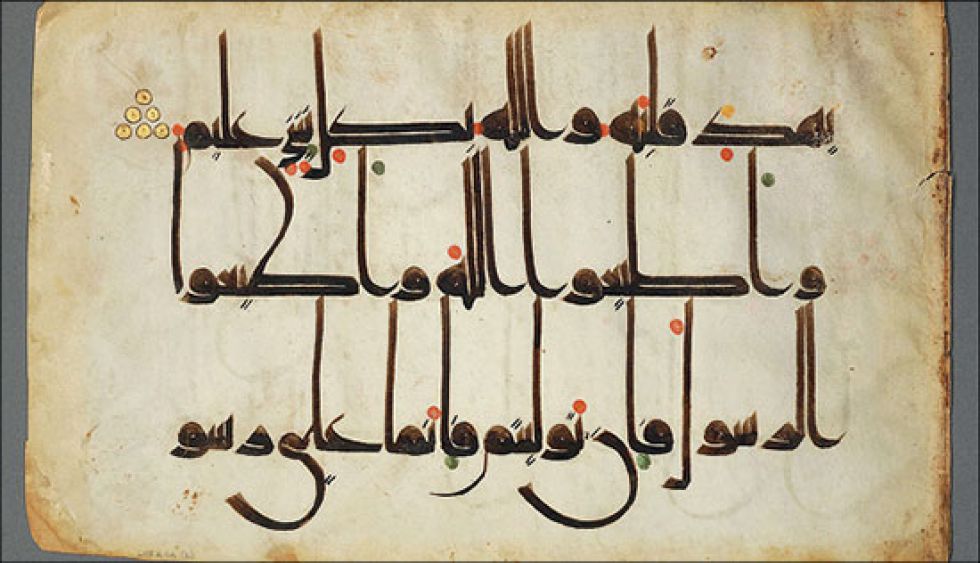
Kufic Script
The Kufic script is one of the oldest and most majestic forms of Arabic calligraphy. It was named after the city of Kufa, where it was widely used. There are many variations of Kufic, all known for their beauty and balance. Early Arab calligraphers excelled in decorating and refining its letters. Historically, Kufic was used in coin inscriptions, wood carvings, and stone engravings.
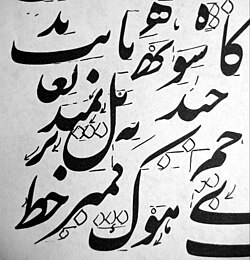
Persian Script (Farsi / Nasta‘liq)
The Persian script spread across the Persian regions and is admired for its elegance and fluidity. It is easy to write and visually appealing. There are three main types: Standard Farsi, Shikasteh, and Shikasteh Amoz. One of its distinctive features is the artistic way letters are connected, sometimes linking one word with the next for harmony. The Persian script evolved from Thuluth, Ruq‘ah, and Naskh styles.
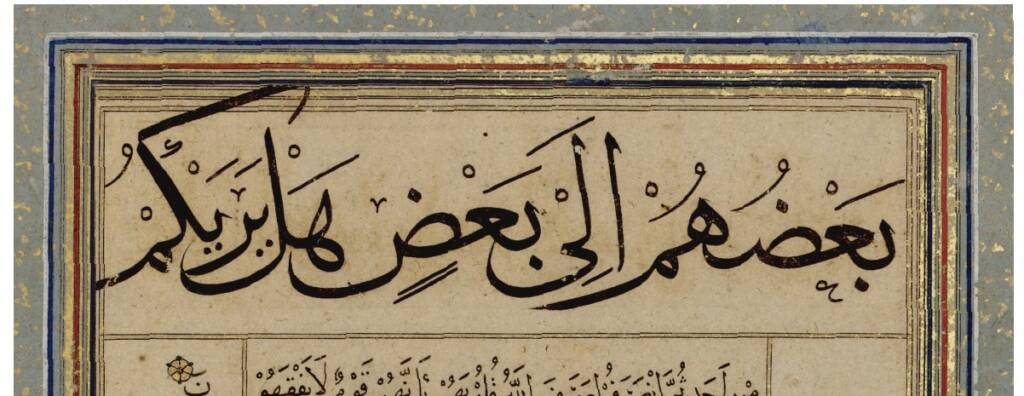
Thuluth Script
The Thuluth script is known for its beauty and readability. It has two main variations: Heavy Thuluth and Light Thuluth. This script was often used in writing Qur’anic verses and on mosque decorations. Skilled calligraphers mastered its elegant curves, and it is said to have originated from the Ṭūmār style.
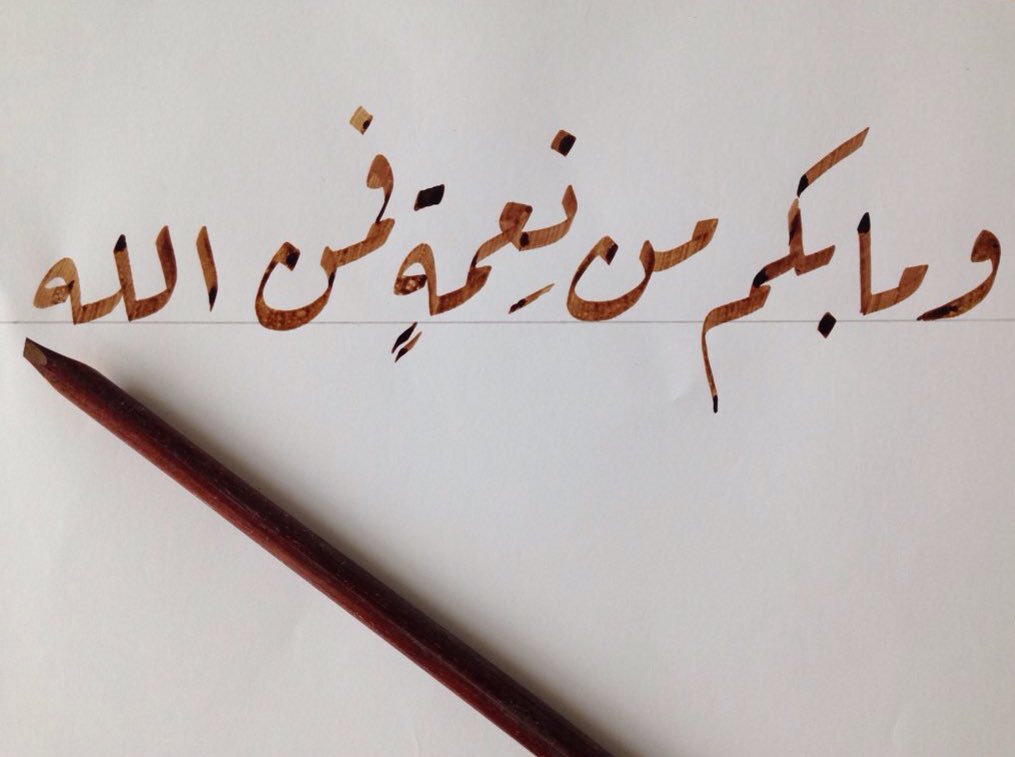
Ruq‘ah Script
The Ruq‘ah script is among the most practical and legible forms of Arabic writing. Its letters are simple, free from complex flourishes, making it easy for anyone to read. The name Ruq‘ah comes from the small pieces of paper (ruq‘ah) it was originally written on. It became popular for advertisements, newspapers, and everyday writing due to its clarity and simplicity.
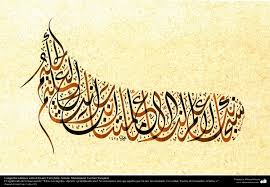
Diwani Script
The Diwani script is one of the most intricate and elegant Arabic scripts. Its letters are closely connected, making it difficult for untrained readers to decipher. It was often used in royal documents, official decrees, and ornamental inscriptions, including currency designs and decorative patterns. A more elaborate version of this script is known as Jali Diwani.
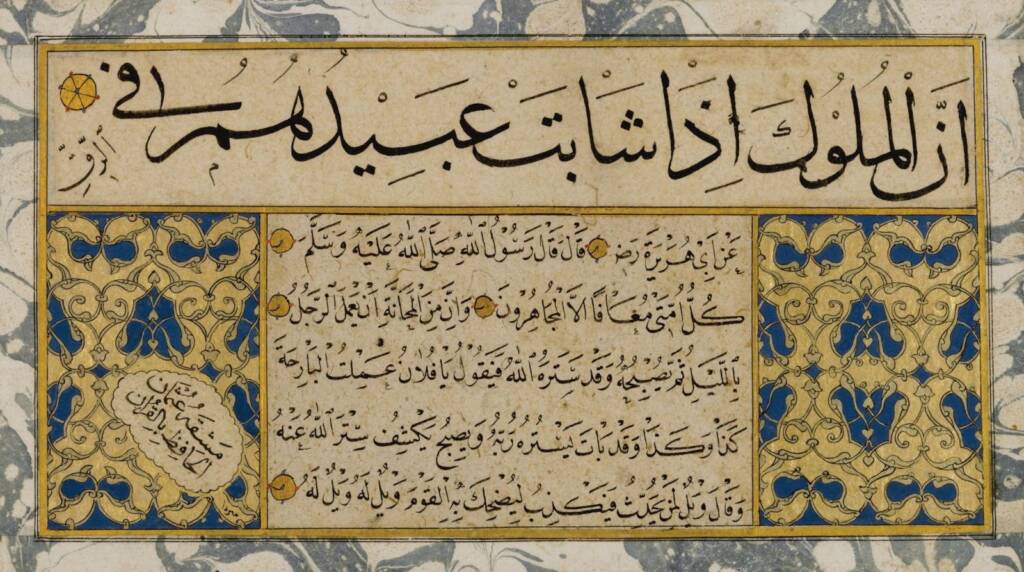
Naskh Script
The Naskh script derives its name from its widespread use in copying books (naskh means “to copy”). It was established in the first century AH (7th century CE) by order of the Umayyad Caliph ʿAbd al-Malik ibn Marwān, as an improvement over the Kufic script, which was harder to read. It gained prominence during the Abbasid era through Ibn Muqla al-Shirazi in the fourth century AH (10th century CE).
Naskh is valued for its simplicity, elegance, and legibility. It is also known by other names, such as al-Madawwar al-Badī‘ (the graceful round) and al-Maqwār. The Ottomans later perfected it, making it one of the most widely used scripts in the Islamic world.
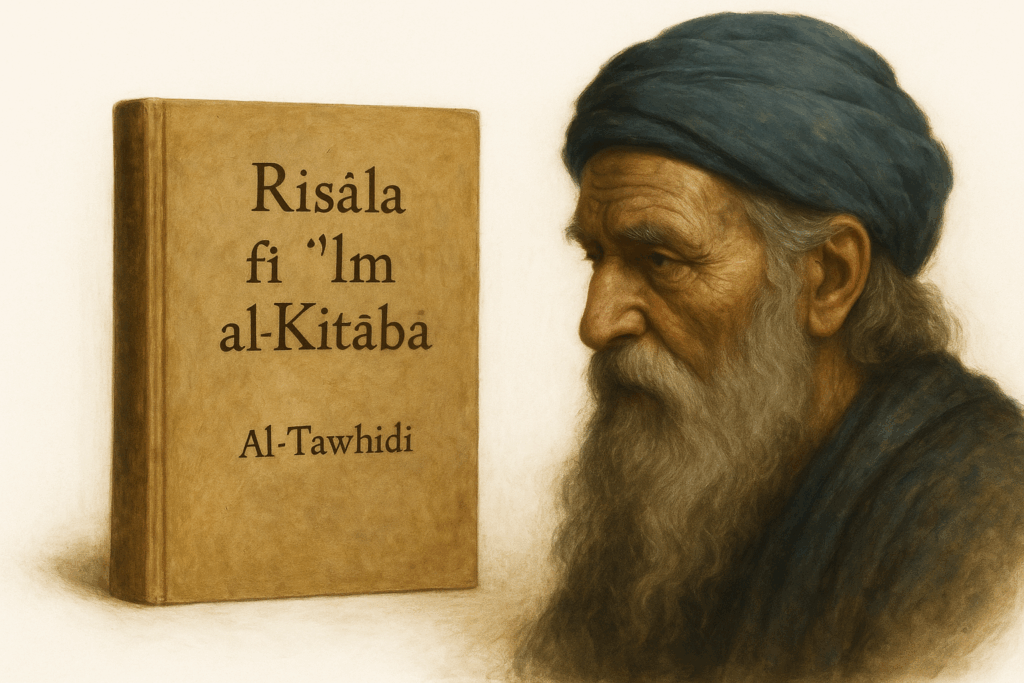
The treatise of Abu Hayyan al-Tawhidi, titled “Risāla fī ʿIlm al-Kitāba” (Treatise on the Art of Writing), is considered one of the rare and unique works in the Arabic language. In this work, al-Tawhidi demonstrates his deep knowledge of calligraphy, its styles, and its intricate techniques—knowledge he acquired through his experience as a scribe and copyist (warraq). His expertise in this profession reflects his vast erudition and artistic sensitivity.
In his treatise, Abu Hayyan states that a skilled writer or calligrapher must master seven essential qualities, which he lists and explains one by one. While elaborating on them, he adds three additional qualities, not mentioned in the original seven, yet equally important and sharing the same rhyming ending (-īq).
The seven main principles he outlines are that writing should be:
- Precise (al-taḥqīq)
- Refined through careful observation (al-taḥdīq)
- Balanced with harmony (al-taḥwīq)
- Adorned with elegance (al-takhriq)
- Beautified with delicacy (al-tashqīq)
- Perfected with subtle accuracy (al-tadqīq)
- Distinguished by clarity and distinction (al-tafrīq)
And the three additional recommendations are:
- al-taʿrīq (inclination or slanting for grace)
- al-tansīq (order and proportion)
- al-tawfīq (harmony and coherence)
Through these principles, al-Tawhidi presents not only a guide to the aesthetics of Arabic script but also a reflection of his philosophical and artistic vision of writing as both a craft and a form of beauty.