We will discuss four calligraphers who lived during the same historical period and shared the same name: Yāqūt. The first of them was Amīn al-Dīn Yāqūt ibn ʿAbd Allāh al-Mawṣilī al-Malikī, while the last to pass away in the seventh century AH was Yāqūt ibn ʿAbd Allāh al-Rūmī, known as al-Mustaʿṣimī, so called in reference to Caliph al-Mustaʿṣim bi-llāh, the last of the Abbasid caliphs, who was killed by the Tatars in 656 AH. He was given the title Jamāl al-Dīn, and the leadership of the art of calligraphy was entrusted to him, such that he came to be regarded as the foremost master of his time. He died in Baghdad in 698 AH.Among him and his contemporaries, three notable figures combined excellence in calligraphy with mastery of poetry. Yet, it was Amīn al-Dīn al-Malikī and Jamāl al-Dīn al-Mustaʿṣimī who truly practiced the art of calligraphy and achieved distinction in it, whereas Muhadhdhab al-Dīn was more devoted to poetry. As for Yāqūt al-Ḥamawī, he refined his skills in calligraphy but did not dedicate himself exclusively to it.
Amin al-Din Yaqut ibn ʿAbd Allah al-Mawsili
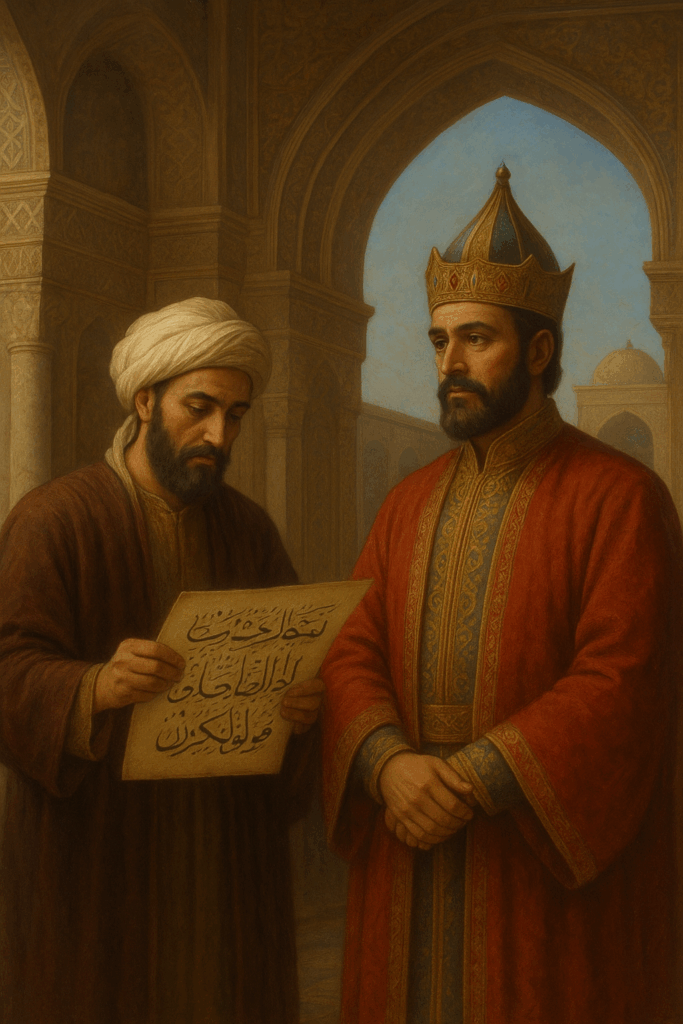
Amin al-Din Yaqut ibn ʿAbd Allah al-Mawsili, known by the title al-Malaki in reference to his patron, the Seljuk Sultan Malikshah ibn Muhammad ibn Malikshah—also called Muhammad I or Muhammad Tapar—was a celebrated calligrapher whose art left a lasting mark on the Islamic world. Sultan Muhammad Tapar, son of Sultan Malikshah I, rose to power after his father’s death and, despite prolonged struggles for authority with his brothers, especially Barkiyaruq, maintained rule for several years during a period of internal conflict and division within the Seljuk state. Yaqut al-Mawsili served as the sultan’s scribe and honed his mastery of calligraphy under the guidance of the renowned scholar and calligrapher Shahda bint Ahmad al-Ibri al-Dinawari. His fame spread widely, and his script was considered the height of elegance, with no rival in his era capable of matching his refinement, nor of rendering Ibn al-Bawwab’s naskh style with such precision. He devoted much of his life to copying al-Sihah by al-Jawhari, producing numerous single-volume manuscripts, several of which were highly prized and valued at one hundred dinars each. Many students studied under him and benefited from his skill, ensuring the continuation of his legacy. Though old age eventually altered the steadiness of his hand, his reputation remained untarnished, and he passed away n Mosul in 618 AH (1221 CE), remembered as one of the finest calligraphers of his age.
Yaqut ibn ʿAbd Allah al-Rumi, known as Abu al-Durr and honored with the title Muhadhdhab al-Din
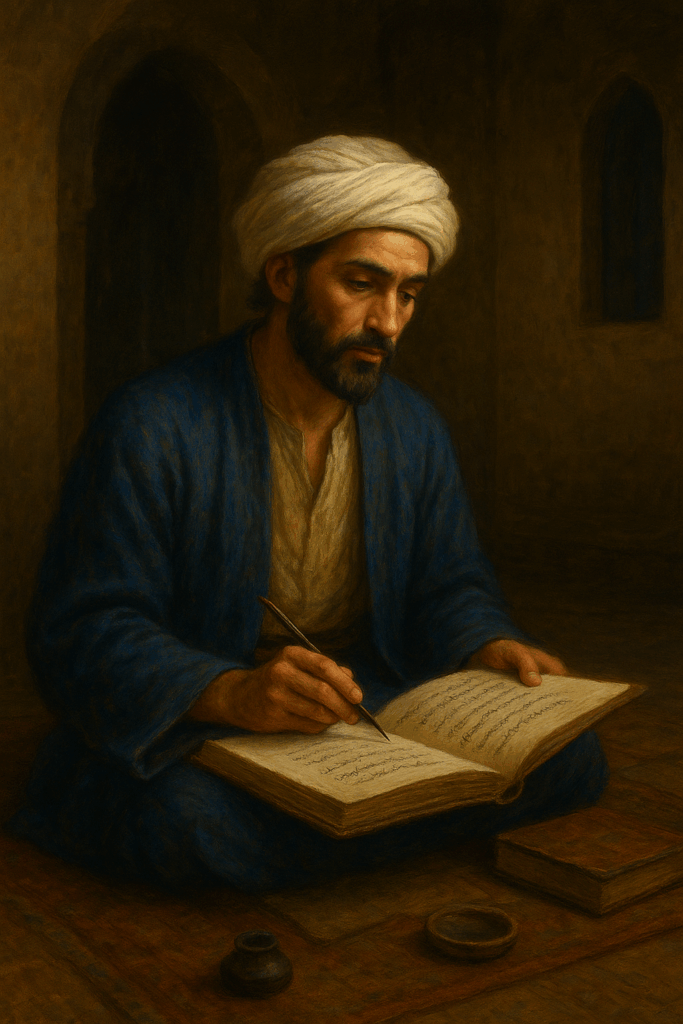
Yaqut ibn ʿAbd Allah al-Rumi, known as Abu al-Durr and honored with the title Muhadhdhab al-Din, was a distinguished poet and man of letters from Baghdad, where he was also laid to rest. A mawla of the merchant Abu Mansur al-Jili, he pursued his studies at the Nizamiyya school, where he memorized the Qur’an, refined his manners, and excelled in poetry and composition. Though he once attempted to change his name to “ʿAbd al-Rahman,” his original name, “Yaqut,” remained the one by which he was most widely known. He became renowned for both the elegance of his script and the refinement of his verse, leaving behind a Diwan of poetry comprising about ten booklets, copies of which were later seen and described by Ibn Khallikan, who regarded him as a celebrated poet deeply engaged in scholarship and literature. Yaqut al-Hamawi praised him as “one of the distinguished men of letters of his age and among its most accomplished writers.” His verse, marked by sensitivity and lyricism, included lines such as: “By God, my two friends, no night has darkened, nor has gloom descended, without a lover sighing or going mad.” Ibn al-Najjar records in Dhayl Tarikh Baghdad that Abu al-Durr was found dead in his home on Wednesday, the 15th of Jumada al-Ula in the year 623 AH (1226 CE), likely around sixty years of age.
Yāqūt Shihāb al-Dīn ibn ʿAbdullāh al-Rūmī al-Ḥamawī (1179–1229)
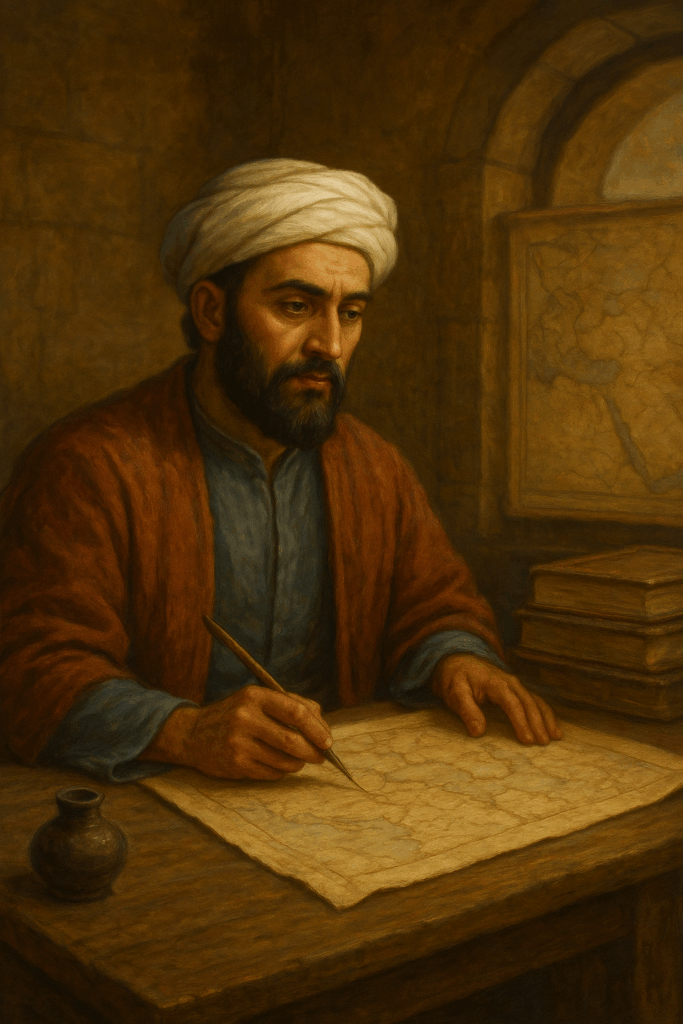
Yāqūt Shihāb al-Dīn ibn ʿAbdullāh al-Rūmī al-Ḥamawī (1179–1229) was a distinguished Muslim scholar of Byzantine origin, active during the late Abbasid period (12th–13th centuries). He is best known for his monumental work Muʿjam al-Buldān (“Dictionary of Countries”), a vast geographical encyclopedia that not only documents geography but also preserves invaluable material on biography, history, and literature.
The name “Yāqūt” (meaning ruby or hyacinth) served as his kunya, while “al-Rūmī” indicates his Byzantine roots, as he was born in Constantinople, the Byzantine capital (known in Arabic as al-Rūm). Captured during conflict and enslaved, he became the mawlā of ʿAskar ibn Abī Naṣr al-Ḥamawī, a merchant of Baghdad, from whom he received the nisba “al-Ḥamawī.” Under his master’s service, Yāqūt was trained in commerce and accounting, and he was often sent on trade missions, including multiple journeys to Kish in the Persian Gulf.
Around 1194, following a dispute with his master, his stipend was cut off, forcing him to work as a copyist. During this period, he also pursued serious study under the grammarian al-ʿUkbarī. Five years later, he again undertook a mission to Kish, but upon his return to Baghdad he established himself as a bookseller and began his career as an author.
For the next decade, Yāqūt traveled widely across Iran, Syria, and Egypt, gathering knowledge and materials. His greatest contribution lies in the testimony he preserved of the immense—though largely lost—literary and scholarly heritage of the Islamic world, particularly in the libraries of Central Asia. He spent two years studying in Merv and visited Balkh, recording the wealth of texts housed there shortly before their devastation by the Mongol invasions.
By 1222, he was working on his Muʿjam al-Buldān in Mosul, completing its first draft in 1224. In 1227, he traveled to Alexandria and later settled in Aleppo, where he died in 1229.
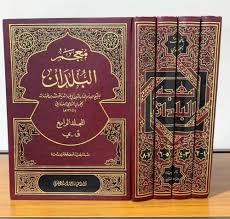
Yāqūt al-Ḥamawī’s most celebrated work is Kitāb Muʿjam al-Buldān (“Dictionary of Countries”), a monumental literary geography composed between 1224 and 1228 and completed shortly before his death. Organized alphabetically, it catalogues place names with explanations of their pronunciation, origins, and locations, enriched with historical, ethnographic, and literary notes. Beyond geography, it preserves a wealth of early material on history, biography, poetry, and accounts of Muslim conquests.
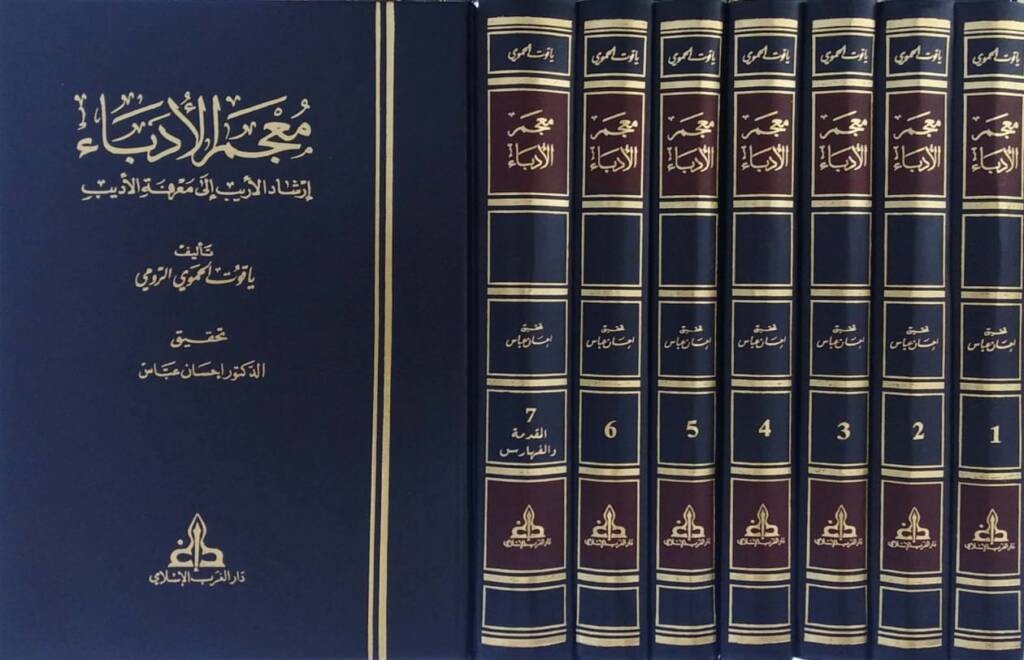
Another of his major contributions is Muʿjam al-Udabāʾ (also known as Irshād al-Arīb ilā Maʿrifat al-Adīb), compiled in 1226. This vast biographical encyclopedia of writers and scholars offers detailed entries on their lives, works, and literary merits, serving as a key reference for Arabic literary history.
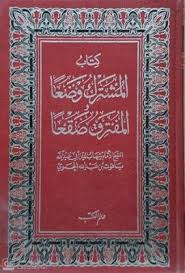
He also authored al-Mushtarak wadhʿan wa-l-Muftaraq ṣuqʿan, a lexicon of homonymous geographical names, and Marāṣid al-Iṭṭilāʿ, an abridged version of Muʿjam al-Buldān. Together, these works highlight Yāqūt’s role as a preserver of geographical and literary heritage, ensuring that much knowledge lost in the wake of the Mongol invasions survived through his writings.
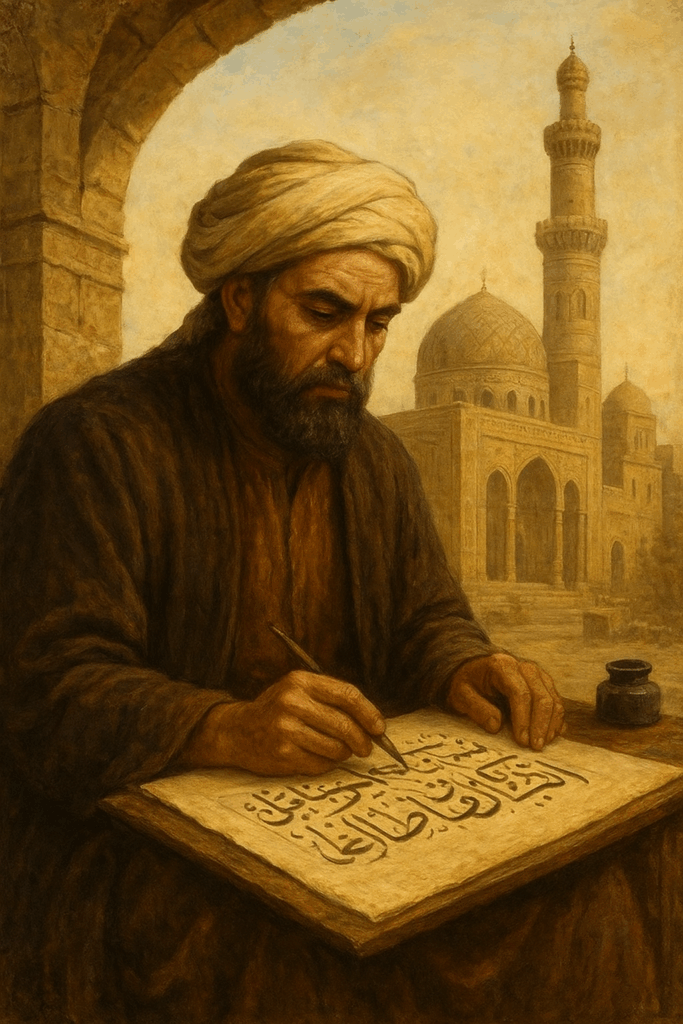
Yaqut al-Mustaʿsimi
“Yaqut al-Mustaʿsimi, also known as Jamal al-Din Abu al-Majd Yaqut ibn ʿAbd Allah al-Rumi al-Mustaʿsimi al-Tawashi al-Baghdadi, and nicknamed Qiblat al-Kuttab (‘the Master of Calligraphers’), was a famous calligrapher, writer, and man of letters from Baghdad. Of Byzantine (Rumi) origin, he was one of the mamluks of al-Mustaʿsim Billah, the last Abbasid caliph. He died in 696 AH (1297 CE), though some sources report 686 AH (1287 CE). Among his works are Asrar al-Hikma (‘The Secrets of Wisdom’) and Akhbar wa Ashʿar (‘Accounts and Poems’).”The book Al-Nujum al-Zahira fi Muluk Misr wa al-Qahira (The Shining Stars of the Kings of Egypt and Cairo) records: ‘In this year died the master Jamal al-Din Abu al-Majd Yaqut ibn ʿAbd Allah al-Mustaʿsimi al-Rumi al-Tawashi, renowned for his exquisite calligraphy, celebrated in both East and West. He was especially close to his master and teacher, the Abbasid Caliph al-Mustaʿsim Billah, the last of the caliphs in Baghdad. The caliph raised him, educated him, and trained him until he excelled in literature and poetry, and became the foremost master of calligraphy.
Calligraphy
Jamal al-Din ibn ʿAbd Allah al-Mustaʿsimi al-Tawashi al-Baghdadi, later known as Qiblat al-Kuttab (“the Master of Calligraphers”), was among the most prominent calligraphers of the Abbasid era after Ibn al-Bawwab and his students. His reputation overshadowed that of other calligraphers, and with his appearance a new era of refinement in calligraphy was opened.
He was originally a mamluk (slave) of the Abbasid caliph al-Mustaʿsim Billah, the last Abbasid caliph in Baghdad, and was thus attributed to him. Of Greek (Byzantine/Rum) origin, his kunyah was Abu al-Durr. The caliph purchased him as a young boy and raised him in the palace. Sources such as Tuhfat al-Khattatin mention that he was a tawashi (a court servant or eunuch; the Turks used this term for a palace slave).
Yaqut studied calligraphy with Safi al-Din ʿAbd al-Muʾmin al-Urmawi and Zaki al-Din ʿAbd Allah ibn Habib, who both followed the style of Ibn al-Bawwab. Some scholars say he was the last great master of proportioned script (al-khatt al-mansub) under the Abbasids. He refined and developed the work of Ibn Muqla and Ibn al-Bawwab, adding elegance and grace to the letters by introducing subtle variations in pen-cutting (tahrif al-qalam). Though pen-tilting was known from the 3rd century AH (long before Yaqut), he mastered and perfected its use, achieving unmatched beauty in script.
Yaqut lived a comfortable life until the Mongol invasion of Baghdad in 1258, when his master al-Mustaʿsim was killed. He is said to have taken refuge in a minaret, which saved his life. Later, he came under the patronage of ʿAlaʾ al-Din al-Juwayni, the Mongol governor of Iraq, whose family greatly supported him. This allowed him to live prosperously, and he was eventually appointed librarian at the Mustansiriyya Library, under the supervision of the historian Ibn al-Fuwati.
Renowned for both his art and noble character, Yaqut was described by al-Dhahabi in Tarikh al-Islam as:
“A leader, highly respected in Baghdad, dignified and honorable.”
He was also praised for his poetry and literary skills.
Students and Works
Among his distinguished students were:
Kamal al-Din ibn ʿAbd Allah al-Isfahani -Najm al-Din al-Baghdadi
Arghun al-Kamali al-Baghdadi
Ahmad al-Suhrawardi
Mubarakshah ibn Qutb al-Baghdadi
ʿAbd Allah al-Sayrafi
Mubarakshah al-Suyufi
Nasr al-Din al-Tabib-Yusuf ibn Yahya al-Kufi
Yaqut authored several works, the most important being a treatise on calligraphy. He also copied many Qur’ans and books, along with countless calligraphic panels. It is reported that he transcribed 364 Qur’ans in his lifetime.
He passed away in Baghdad in 698 AH (1298 CE), according to the historian Ibn al-Fuwati, who was his contemporary. Yaqut was buried near the tomb of Imam Ahmad ibn Hanbal. He is believed to have lived about 89 years.
Legacy
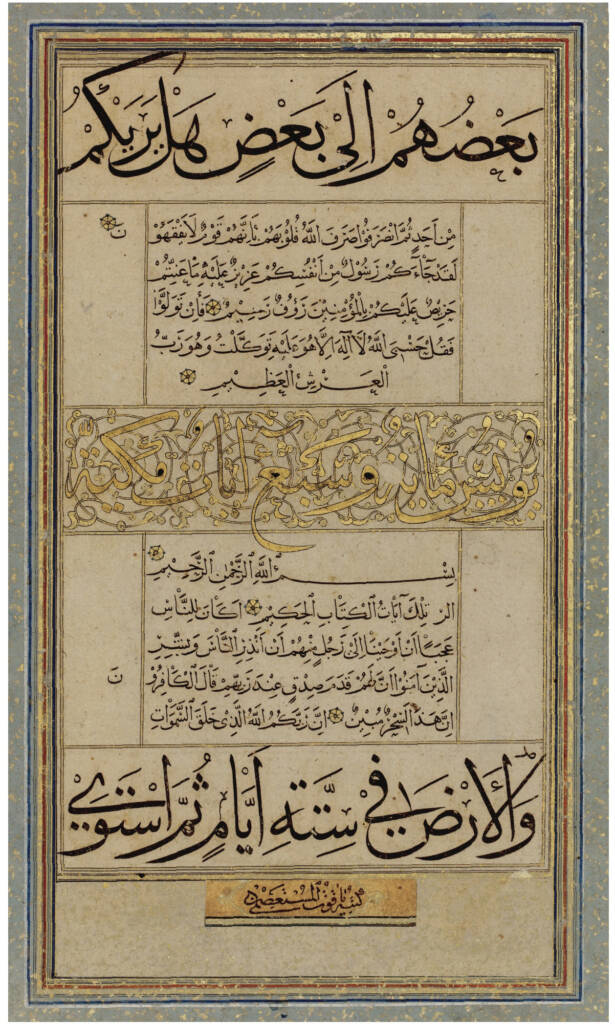
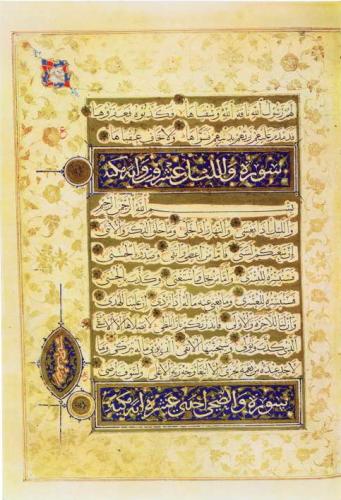
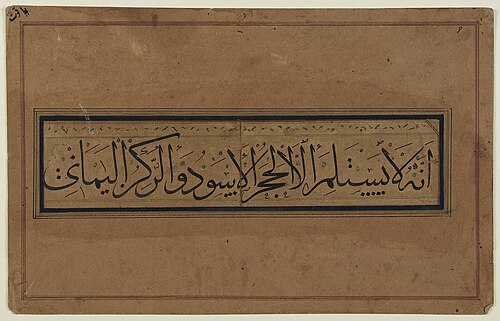
With Yaqut, the six canonical scripts of Islamic calligraphy were firmly established:
Thuluth, Naskh, Rayhan, Muhaqqaq, Tawqiʿ, Riqā
These scripts became the recognized foundation of Islamic calligraphy. Yaqut’s mastery shone most brilliantly in Thuluth and Rayhan, which he elevated to new heights of beauty and sophistication.