who is ?
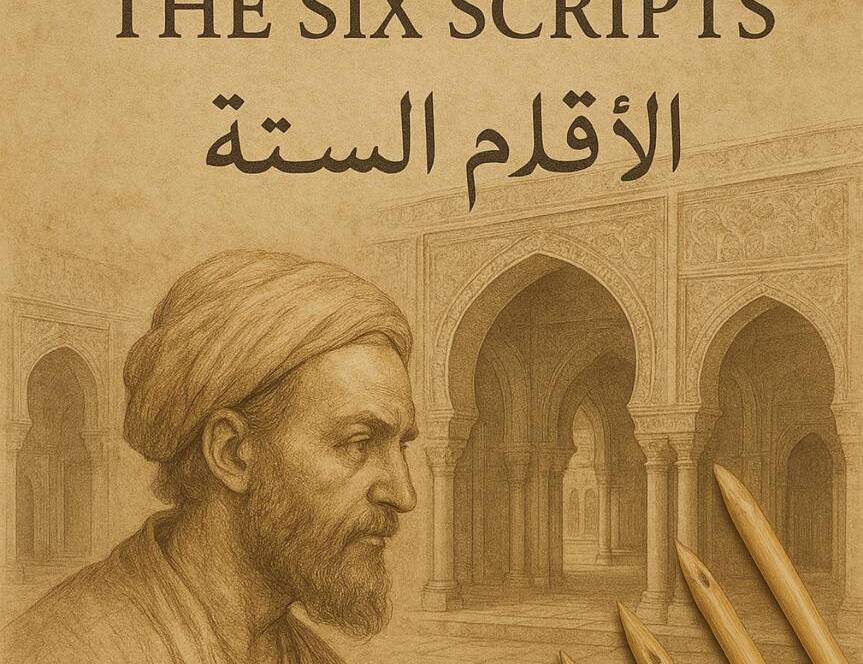
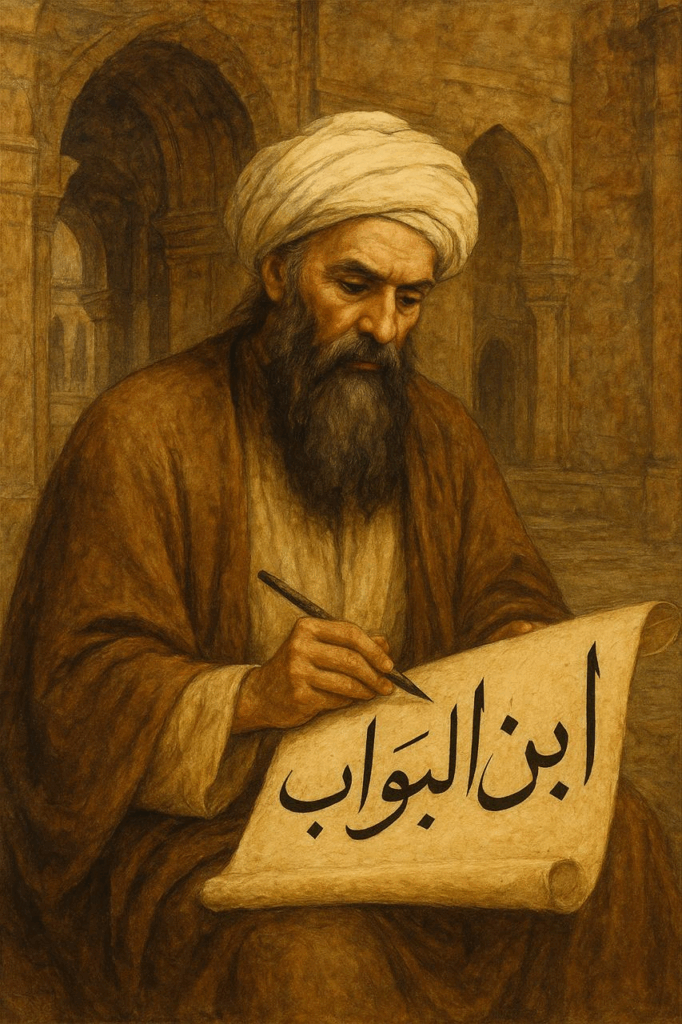
Ibn al-Bawwāb (Arabic: إِبْن ٱلْبَوَّاب), also known as Ali ibn Hilal, Abu’l-Hasan, and Ibn al-Sitri, was a renowned calligrapher and illuminator from Baghdad. He is widely credited with popularizing the rounded script style for transcribing the Qur’an, marking a major development in the art of Islamic calligraphy. He likely passed away around 1022 CE in Baghdad.
Life and Career
Born into a modest background, his name translates literally to “Son of the Doorkeeper.” Despite his humble origins, Ibn al-Bawwāb was well-educated, having studied law and theology, and was known for his deep religious devotion. It is said that he had memorized the entire Qur’an.
Though comprehensive biographical details are scarce, historical accounts suggest he initially worked as a home decorator before transitioning to book illumination and, eventually, to calligraphy. At the time of his death, he was buried in Baghdad near the tomb of Ahmad ibn Hanbal, a prominent Islamic scholar.Ibn al-Bawwāb was proficient in all six classical scripts and is known for refining and standardizing them. He gained fame during his lifetime and was often recognized by his distinctive long beard. His stylistic innovations influenced generations of calligraphers who followed.
Artistic Legacy and Works
Over his lifetime, Ibn al-Bawwāb is said to have copied the Qur’an 64 times. Of those, six manuscripts remain with colophons attributing the work to him. The most famous among these is housed at the Chester Beatty Library in Dublin, Ireland, a manuscript believed to have been gifted by Ottoman Sultan Selim I (r. 1470–1512).
In addition to religious texts, he also created luxury codices, including a notable manuscript compiling the works of pre-Islamic poet Salama ibn Jandal.
He is celebrated as one of the first to perfect the al-Khatt al-Mansub (literally, “the well-proportioned script”), setting foundational rules for proportionality and balance in Islamic script. He also helped develop and refine early cursive styles such as: Rayḥānī ,MUHAQQAQ, TAWQII, NASKH.
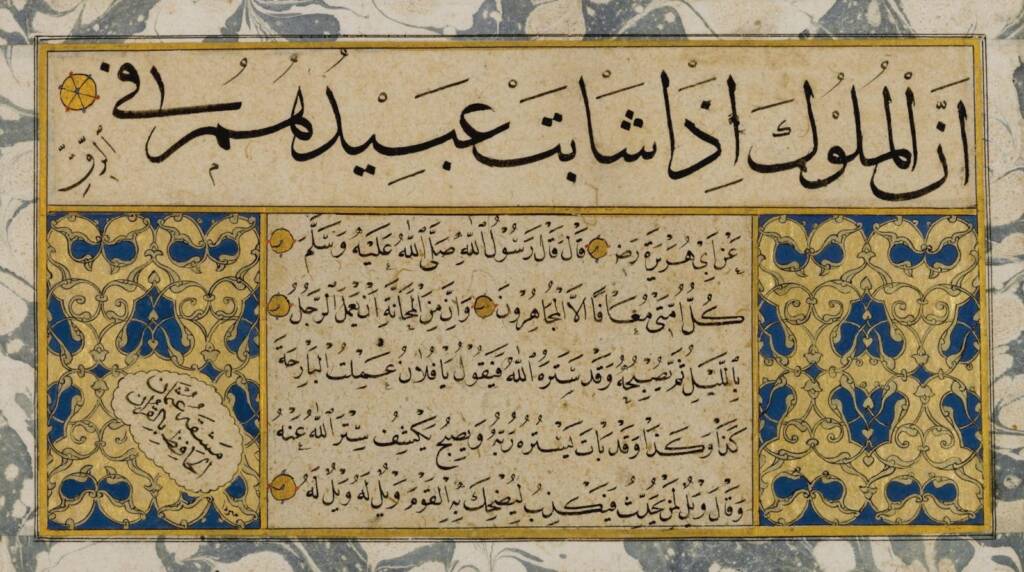
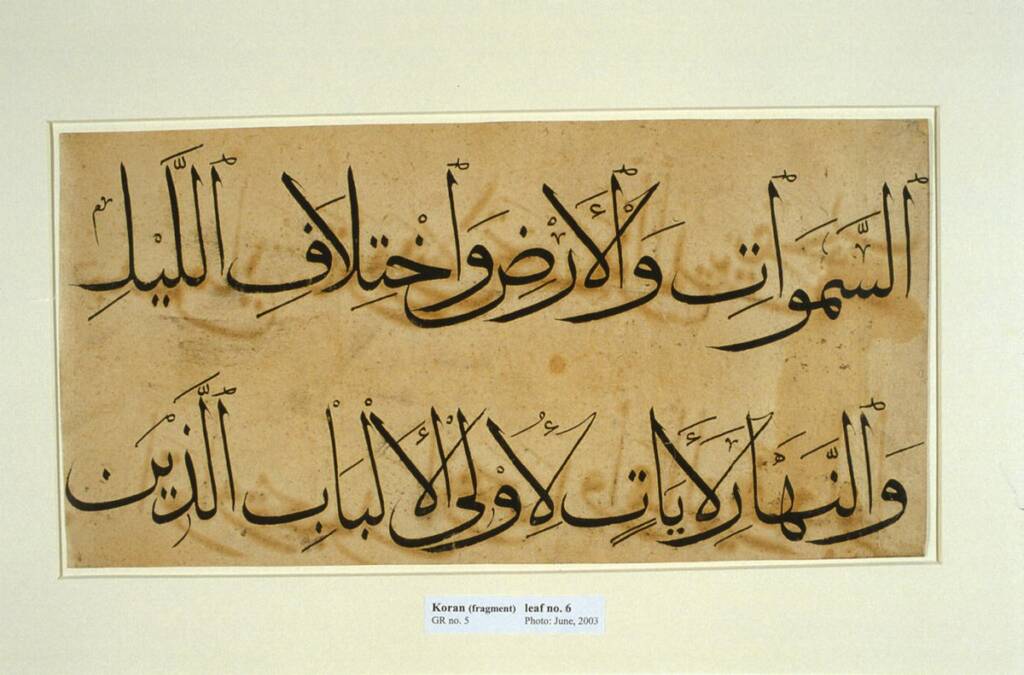
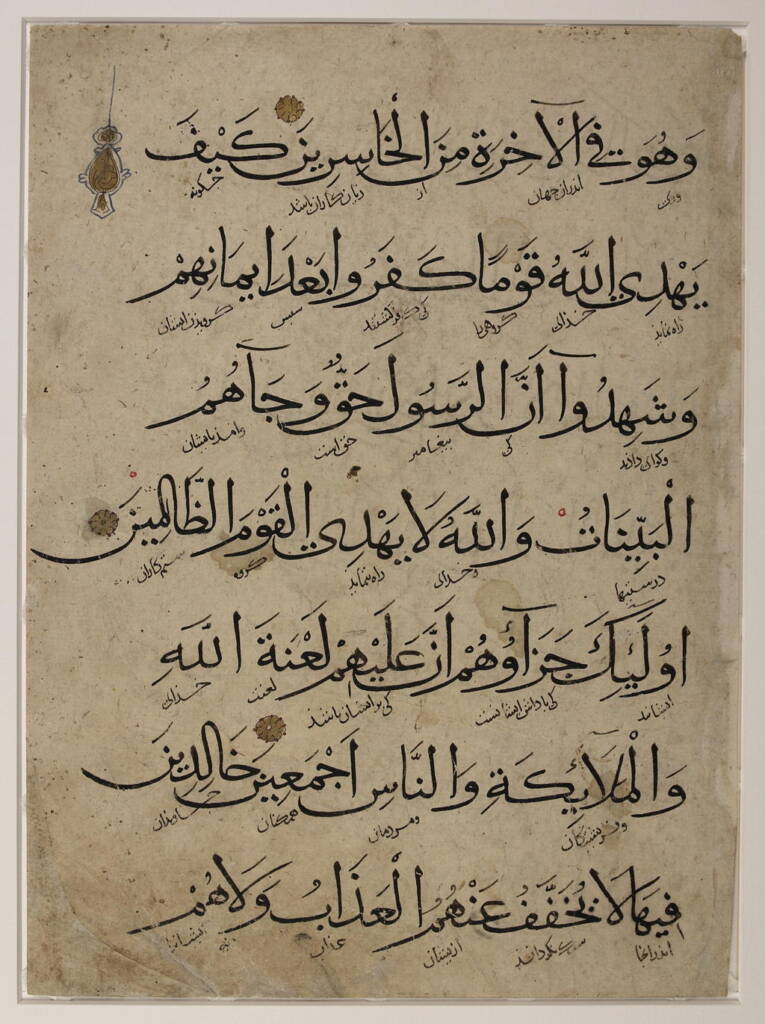
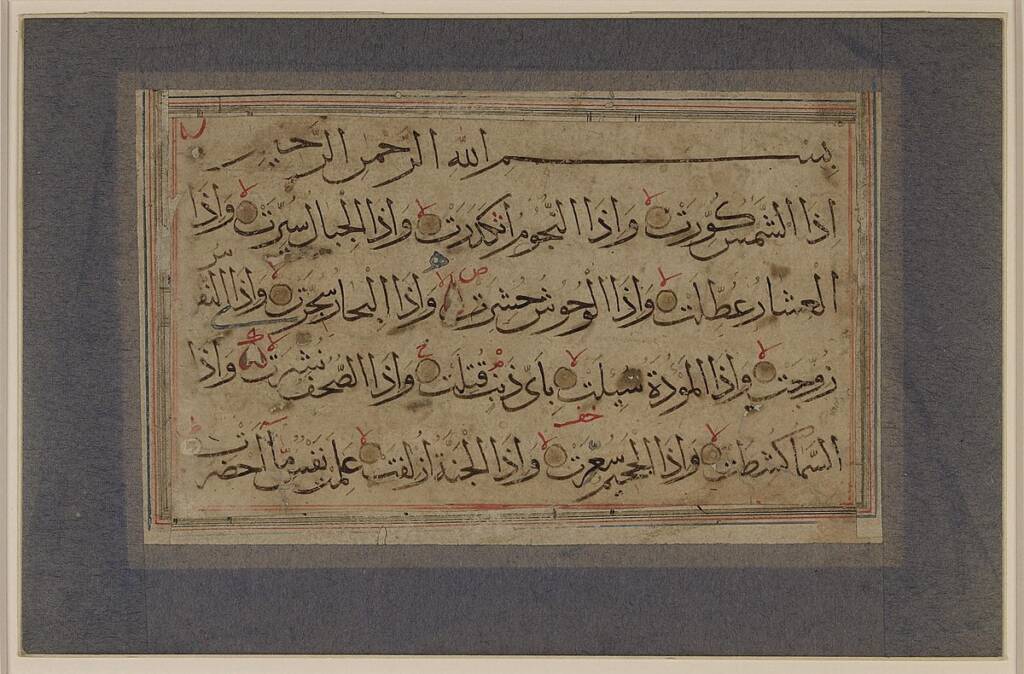
His school of calligraphy remained influential until the Mongol invasion of Baghdad more than two centuries later.
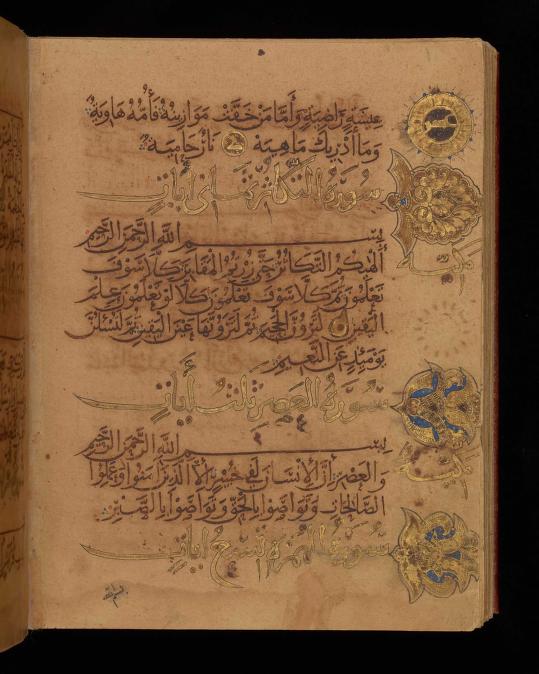
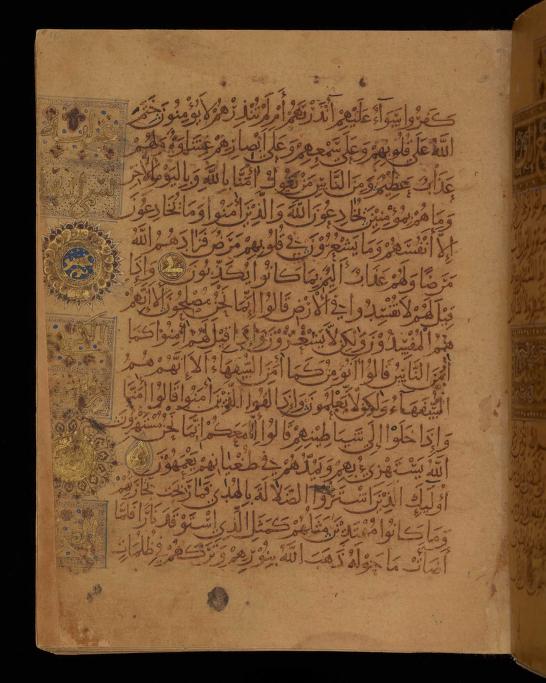
The Chester Beatty Qur’an is the only surviving Qur’an manuscript definitively penned by Ibn al-Bawwāb. It stands as a milestone in Islamic bookmaking—the earliest known Qur’an written on paper, marking a shift from older parchment and vellum traditions.
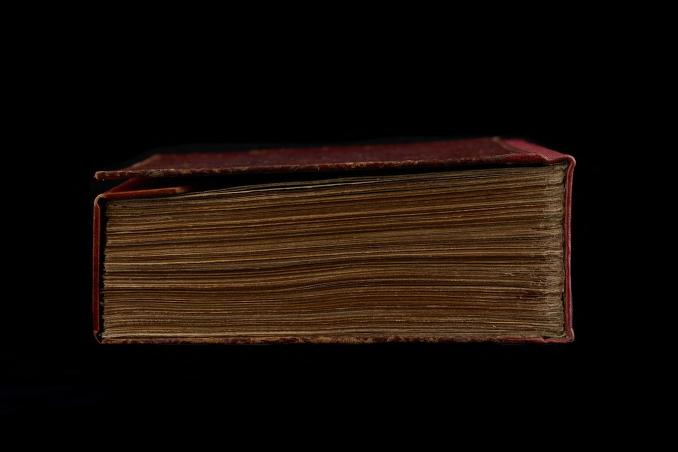
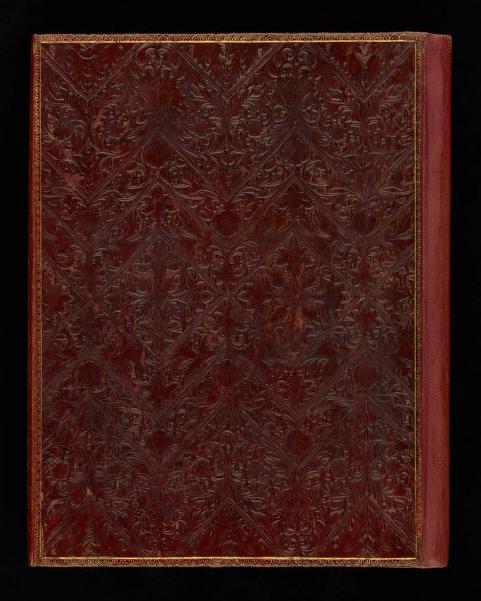
Though paper-making had reached Baghdad via the Silk Road by the 9th century, this manuscript showcases the refined quality of later Islamic paper, suitable for sacred texts. The manuscript consists of 286 folios and originally measured 14 x 19 cm.
Key features include:
- Fully vocalized text with consonants and vowels in the same ink
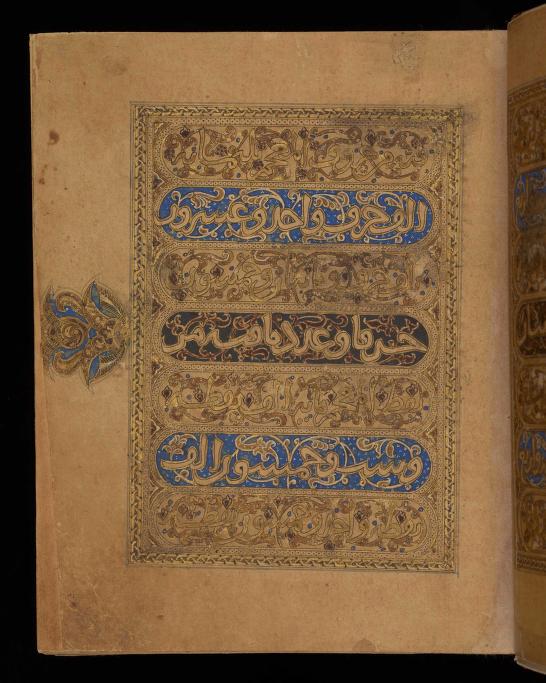
- Rich illuminations using blue, gold, sepia, and additional colors like red, green, brown, and white
Evidence suggests the calligrapher also completed the illumination, using a reed pen and matching ink—further confirming his dual mastery in both writing and decoration
Innovations in Style and Structure
This Qur’an introduced several stylistic innovations that shaped Qur’anic calligraphy for centuries:
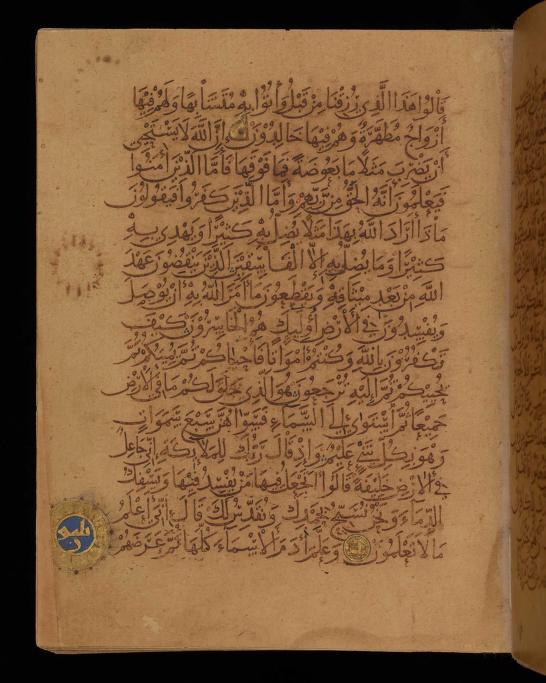
- Vertical orientation: Departing from the horizontal layout of older manuscripts
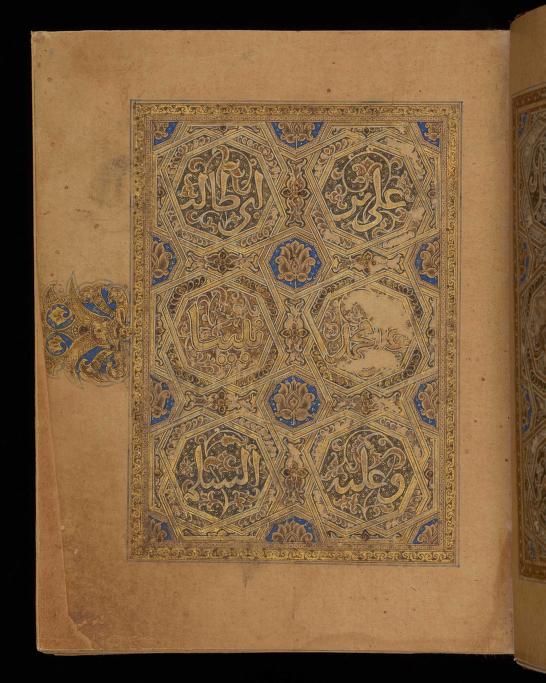
- Use of cursive script: Instead of the traditional Kufic, Ibn al-Bawwāb used Naskh for the main text and Thuluth for headings and introductory pages
- Detailed statistical folios: Expanded upon earlier formats to include counts of verses, words, letters, and even the number of dotted vs. undotted letters in each surah
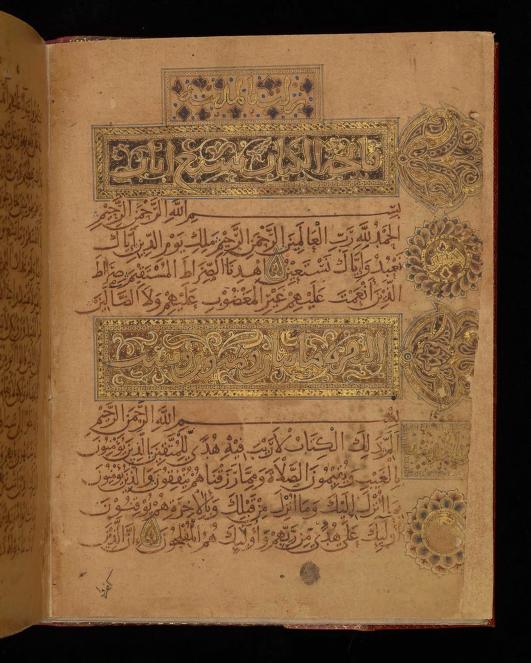
Two major innovations in spacing also stand out:
- In the Basmala (بسم الله الرحمن الرحيم), Ibn al-Bawwāb broke with the symmetrical layout, instead using asymmetry by extending letters to create space between words—drawing the reader’s eye and emphasizing section breaks
Verse endings are not separated by space, but rather marked by triangular clusters of blue dots. However, every fifth and tenth verse includes spacing filled with gold markers for easy navigation.
Conclusion
Ibn al-Bawwāb’s work marked a turning point in the visual and aesthetic development of the Qur’an. His contributions to script refinement, manuscript design, and artistic innovation helped define the classical Islamic calligraphic tradition, leaving a legacy that extended well beyond his lifetime.